
TELEMEDICINE
BUSINESS CENTER
BUSINESS CENTER
Telemedicine Business Center
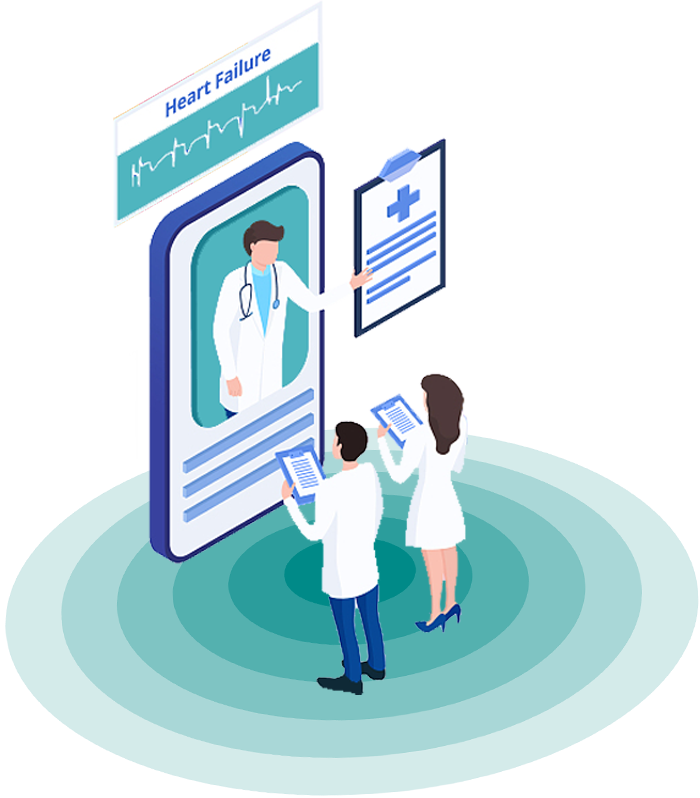
Remote consultation is the activities that utilizing telecommunication, computer and network technologies, online real-time interactions to perform remote guiding inspections, assisting diagnosis, guiding treatment among medical institutions. It relies on the remote consultation platform to carry out remote specialist consultation, at the same time, supports the function of multi-disciplinary joint consultation, to realize the sharing of high-quality medical resources. The remote consultation system includes a consultation application module, a quality control management module, a triage management module, an expert consultation module and a report publish module etc.
Remote clinics utilize network technology to allow patients to communicate directly with distant medical experts in the nearest medical site. Through the interconnection of diagnosis and treatment data, doctors can consider, summarize and analyze comprehensively and carefully of the patient's condition without the need for the patient to visit in person, to make a correct diagnosis and formulate a scientific and appropriate treatment plan. For intractable diseases, remote clinics is different from remote consultation, which pays more attention to timeliness and convenience, providing patients with a window to register to a distant hospital at the first time. The remote clinic system includes functional modules such as appointment registration, expert consultation details, online consultation, expert consultation, video consultation, expert medical record editing, expert shift scheduling, configuration of large screen for calling, drug storehouse, medicine and etc.
Remote two-way referral is a process in which medical staff opterate patience-transfer among medical institutions according to the needs of patients' condition treatment. When the inviting party does not have the technology and equipment required for the treatment of the patient's condition, it can apply for transfer to the invitee through the telemedicine information system. If the invitee makes the judgement of unnecessary stay of the patient based on their condition, they could transfer the patient to primary medical institutions for further treatment. The remote two-way referral system includes functional modules such as referral application, referral reception, and patient transfer, which supports two-way referral between primary medical institutions and higher-level hospitals.
On the remote ward round system, experts can receive the information of patients in lower-level hospitals who need ward rounds, they can simply enter the remote ward round by one click and can read a series of medical information such as the patient's medical record, physical examination and imaging data, and laboratory results in detail. They could make suggestion to the patient's diagnosis and treatment in real time, and use the mobile video system to communicate with the patient face-to-face, to collect information, and formulate a treatment plan. The remote ward round system requires medical information systems such as electronic medical records, health files, and PACS images to be transmitted across hospitals through the network, as well as medical instant messaging tools for remote communication and voice and video image transmission.
The remote visiting system utilize Internet video technology to allow patient family members to communicate with patients in the ward through voice and video, avoiding infection and other medical risks caused by face-to-face contact, and is conducive to harmonious doctor-patient relationship and improve the overall level of medical services. Visitors such as the patient's family members submit a visit application form on the platform, and the platform and the hospital arrange the visit time. Family members can use ordinary computers or mobile terminals to conduct video and conversations, and patients can operate the device with the help of nurses.
Remote nursing applys remote communication technology, informatics technology and nursing care technology, provide medical monitoring, nursing guidance, training and home health care services for remote service through the transmission of data, text, video, audio and images. Remote nursing expands the scope of nursing activities and helps to overcome the disadvantages of service lag caused by time and space barriers among regions.
Compared with traditional first aid methods, remote first aid automatically shares the patient's on-site condition and the implementation of rescue measures in real time through image and video functions. Remote consultation can be initiated on the ambulance, which is convenient for hospital experts to guide the treatment on the road and prepare for the in-hospital rescue at the same time.



Triage telephone:0371-66913001
Consultation telephone:0371-67966217
distance learning:0371-67966210
technical support:0371-67966213
Franchise consulting:0371-67966298
Complaints and suggestions:13503995281

email:HTCC2018@163.COM

The First Affiliated Hospital of Zhengzhou University:No. 1, Jianshe East Road, Zhengzhou


Wechat QR code of national telemedicine center
Copyright © Copyright 2021
Yu ICP Bei No. 09042695 Yu Wei Wang Shen [2013] No. 097